
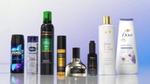
Online shopping has fundamentally changed what consumers expect from brands.
From one-hour deliveries to keeping pace with the latest TikTok trends, expectations around convenience, social visibility, digital agility and direct brand interaction are not only growing but constantly evolving.
So how do we stay ahead?
By leveraging the power of digital commerce (d-commerce) to seamlessly connect unmissable demand creation with flawless delivery.
Our business-to-consumer (B2C) d-commerce sales were up double digits in Q1 2026, driven by key markets like India and the US. At the same time, AI and digital technologies are powering a seismic shift in how we engage, optimise and deliver across the full d-commerce journey.
17% of Unilever’s Beauty and Personal Care turnover already comes from digital platforms, and in Wellbeing, it’s more than 50%. Our focus is on driving this higher, everywhere.
Driving growth through three d-commerce shopping channels
This level of success isn’t happening by chance. It’s being fuelled by a sharpened d-commerce strategy centred on three fast-growing shopping channels.
First, strong partnerships with major retailers continue to drive significant growth. In the US, d-commerce sales with customers such as Walmart and Amazon grew by 25% in FY 2025, powered by retail media, high-quality content and seamless execution.
Second, social commerce is becoming a powerful engine for discovery and conversion. In markets such as South East Asia and China, platforms like Douyin (often described as China’s equivalent of TikTok) and TikTok Shop delivered growth of more than 50% in FY 2025, as content increasingly connects directly to commerce.
Third, quick commerce is enabling delivery within hours, not days, and is already a success in India where sales doubled in 2025 thanks to strong availability, discoverability and improved conversion at scale.
Setting records in social commerce performance
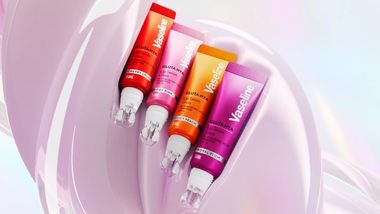
Across Beauty, d-commerce is also driving significant success, with Vaseline’s first-ever UK TikTok LIVE setting a new benchmark for social commerce performance.
At the end of 2025, Vaseline’s Gluta-Hya Lip Serum Gloss bundles sold out on TikTok Shop within just six hours of launch in the UK.
The LIVE ranked in the top 20 TikTok Shop livestreams of the day across all categories, and fourth overall in Beauty, beating industry benchmarks.
The power of brand interaction
So, what is the secret to achieving and maintaining this level of success in a continuously changing d-commerce landscape? Much depends on consistently meeting and exceeding consumer expectations.
“The key to success is creating a Perfect Store where physical and digital experiences work together seamlessly,” says Aaron Jones, Chief Digital Officer, Unilever Wellbeing and Liquid I.V., referring to the recent Formula 1 Liquid I.V. campaign as an example.
Combining a year-long media partnership with ESPN and full 360° digital takeovers at the Miami and Las Vegas Formula 1 events, the campaign extended across LiquidIV.com and media platforms. It also included an integrated video game component, with 80k game play sessions and 45k game finishes. The campaign leveraged entertainment intellectual property (IP) in a fresh way to boost sales and engagement.
“This success is partly due to the digital-native nature of our Wellbeing brands,” says Aaron.
“Our portfolio is highly subscription-friendly and well suited to succeeding in digital environments, whether through marketplaces or retail media. The result is that many of our products, such as Nutrafol, Liquid I.V. and OLLY, are category leaders in both direct-to-consumer and e-retail.”
High-volume content creation delivering impressive sales growth for Personal Care
Personal Care is also successfully converting its social-first content pipeline into online sales growth.
In Vietnam, social commerce across the portfolio is accelerating rapidly, with more than a four-fold sales increase in the first quarter of 2026 compared with the same period last year.
This growth is powered by high-volume, high-velocity, social-first content. Today, each Personal Care brand in the country produces 500+ assets weekly across social platforms.
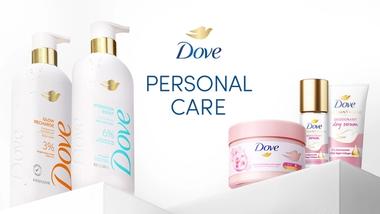
One standout result is the strong growth of Dove Scrubs, which has expanded rapidly over the past two years. The new Dove Serum Body Wash, currently available only through d-commerce channels, has also seen an impressive response, beating expectations by 50%.
The role of pioneering technology in the new era of consumer goods
“All forms of d-commerce, ranging from traditional e-commerce to social commerce, quick commerce and agentic commerce, are growing rapidly,” says Prashaant Huria, Global VP, Digital and Technology, Customer Development.
“Next-generation AI and technology, enabled by a robust and harmonised data foundation, have never been more critical in helping us deliver stronger outcomes and track our performance more effectively across these channels.”
“But this is not purely a technology problem to solve. We need to look at it holistically – from demand forecasting and assortment availability to fulfilment capabilities. All parts of the business need to come together to allow us to win in d-commerce.”
Flawless convenience and delivery
Fast delivery is perhaps the most quantifiable measure of fulfilment for customers, especially during demand spikes triggered by social-first campaigns.
For example, we’ve built an end-to-end automated factory and back-of-factory distribution centre in Hefei, China, that allows us to ship Dove shower gels directly from where they are made to consumers.
“Thanks to innovative tools fuelled by AI and our portfolio of Power Brands, the d-commerce ecosystem is helping us unlock growth, deliver commercial value and meet consumers exactly where they are,” says Graham Sommer, Global Head of Customer Operations.
What is d-commerce?
D-commerce refers to online sales made through platforms including retailer websites, Unilever’s own channels and other online applications.
Frequently asked questions
What is Unilever’s d-commerce strategy?
Unilever uses data, automation and personalisation to meet evolving consumer needs across online retail channels. Rather than treating e-commerce as a single channel, d-commerce integrates personalised consumer experiences, direct brand interaction, convenience and delivery, and social commerce into one connected digital retail approach.
How does Unilever use data to personalise the retail experience?
AI-powered personalisation engines use data to tailor Personal Care and Beauty and Wellbeing shopping journeys across digital channels. By analysing real-time consumer behaviour, the business can deliver the right products, content and recommendations to the right shoppers at the right time. This data-led approach improves both relevance and conversion while also providing opportunities for Unilever to gather first-party insights that directly inform product innovation.
How is AI being used in Unilever’s retail operations?
AI is being used across Unilever’s d-commerce operations to personalise product recommendations, support demand forecasting, optimise inventory and improve supply chain responsiveness. Intelligent automation means Unilever can scale digital retail efficiently across global markets while delivering a more consistent and tailored experience to consumers. AI is also used to identify emerging Personal Care and Beauty and Wellbeing trends through social listening and data analysis.
How does d-commerce improve convenience and delivery for consumers?
Unilever is scaling delivery partnerships and investing in logistics innovation to reduce the gap between consumer demand and product fulfilment. Automation across the supply chain enables faster order processing and more reliable service across markets. The goal is to meet the expectation that has become standard for digital shoppers: that convenience and speed are as important as product quality in the overall retail experience.
Related articles

How Dove turned Reddit’s unfiltered honesty into unmissable marketing
Dove handed Redditors its new hair mask and promised to publish the first 50 reviews unedited. No filter, just radical transparency at scale. Emily Barfoot, Head of Dove US for Beauty & Wellbeing, tells us more about the campaign.

Marketing in a changing world: relevance as a growth engine
Fresh from his panel discussion at SXSW, Chief Marketing Officer Leandro Barreto shares his vision for the next era of Unilever’s marketing transformation: building desire, trust and relevance in a shifting landscape shaped by platforms and creators.

Vaseline’s social-first marketing: beauty hacks, consumer insights and cultural relevancy
With a legacy spanning more than 150 years, Vaseline remains an undisputed beauty icon – and it’s not standing still. The Unilever Power Brand is winning growth by engaging with new audiences through viral moments and smart social-first campaigns. Here’s how.