
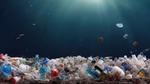
At the UN Environment Assembly in 2022, 175 countries agreed to begin negotiations on a UN treaty to end plastic pollution. Next week, the fifth – and hopefully final – meeting of the Intergovernmental Negotiating Committee (INC-5) takes place in Busan, South Korea.
The aim, from the outset, was for the text of the treaty to be finalised this year. But how close are we to that goal and what outcomes do businesses need from the meeting?
The business case for a treaty that’s high on ambition
Unilever and others have laid the pathway for change on plastic pollution through voluntary initiatives – such as the work of the Ellen MacArthur Foundation (EMF) and the United Nations Environment Programme (UNEP) Global Commitment – and set out a collective strategy for industry to play its role in tackling the problem.
But voluntary initiatives alone aren’t enough. More interventions are needed across the full lifecycle of plastic: both upstream (for example, raw material extraction and production) and downstream (segregation, collection, sorting, recycling and disposal).
Voluntary initiatives also distort the market because they often lead to higher costs. This means that companies taking action are at a competitive disadvantage compared to those not taking action. This can discourage voluntary efforts, highlighting the need for a level playing field where all companies are held to the same standards.
A legally binding treaty underpinned by global rules is a critical opportunity to achieve this, by helping business avoid the current disconnected national efforts and creating a level playing field. This, in turn, would simplify supply chains, scale existing solutions and spur further innovation.
What is the Business Coalition and what is it calling for?
Unilever co-chairs the Business Coalition for a Global Plastics Treaty which aims to give confidence to governments that businesses and financial institutions want harmonised global rules and regulations.
It’s vital for business that the treaty includes a global objective to achieve sustainable levels of virgin plastic production, which is why the Business Coalition endorsed the Bridge to Busan Declaration.
To support the final push of negotiations, the Business Coalition has developed a Treaty on a Page roadmap which outlines a set of minimum requirements for industry to effectively implement a treaty. The Business Coalition’s new video series – which features Unilever’s Head of Packaging Operations and Technology Holly Nelson – also explains the kinds of global rules we are calling for, with some practical examples that are already underway among industry.
In addition, ahead of INC-5, Unilever CEO Hein Schumacher joined other global business leaders in signing an open letter from CEOs to Heads of State, calling on governments to unite and deliver a treaty that’s fit for purpose.
This short video explains the kind of global rules businesses need.
Why Busan is so important
The choice on the table is a voluntary treaty that will lead to further regulatory fragmentation (which will mean additional cost and complexity for businesses) or a treaty underpinned by global rules: one that harmonises regulations and supports solutions at the scale and speed we urgently require.
As Unilever CEO Hein Schumacher has said: “There remains too much emphasis on national measures. We know already that this will not work, as it will create more fragmentation. Business has shown it can scale solutions, but to go much faster and further, we need mandatory global rules.”
The Business Coalition’s Treaty on a Page represents a practical route forward to delivering a deal in Busan that will help business scale solutions.
We stand ready to work together with policymakers across the world on this critical task. There is no time to waste. INC-5 presents a once-in-a-generation opportunity we can’t afford to pass up.
Related articles

Business Coalition, co-chaired by Unilever, endorses Bridge to Busan Declaration
The Business Coalition for a Global Plastics Treaty – which Unilever co-chairs – has endorsed the Bridge to Busan Declaration, calling on governments around the world to agree a global objective to achieve sustainable levels of virgin plastic production.

Unilever boosts investment in packaging R&D to cut virgin plastic
At our Global Packaging R&D Centre, we’re putting significant investment into developing new sustainable packaging materials and technologies. Read how this is accelerating the delivery of our plastic goals.
The CIRCLE Alliance: scaling packaging circularity to reduce plastic waste
Unilever has joined USAID and EY to launch the CIRCLE Alliance, a new public–private initiative aimed at tackling plastic pollution. Read how such collaborations are crucial in responding to the urgent need for collective action.