
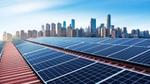
Extreme weather caused by climate change is already lowering crop yields and increasing water scarcity. And it risks disrupting supply chains and raising the price of raw materials.
Without a healthy planet, you can’t have a healthy business. Making the shift to sustainability makes business sense, giving companies a chance to help address the root causes of climate change while simultaneously building their own resilience to its impacts and delivering competitive growth.
What is business sustainability?
Business sustainability is when a company conducts its business without harming people or planet, safeguarding its future business in the process.
Reducing greenhouse gas emissions, protecting nature and delivering social governance are all ways that businesses can make the shift towards sustainability.
Unilever’s purpose is to make sustainability commonplace, through our business model, the products we sell and the influence we have on wider society. We also believe that a truly sustainable business doesn’t just focus on limiting negative impacts: companies should also aim to create positive impacts where possible. By protecting and regenerating nature, for example, businesses are not only reducing emissions and bringing back biodiversity, they can also support local communities by encouraging smallholder farmers to use better farming practices that benefit people and planet.
What are the benefits of a sustainable business model?
Sustainable businesses are future-fit. Companies that embrace sustainability are showing leadership in tackling climate change and getting ahead of the curve of carbon taxes. They are working to meet consumer demands, while boosting productivity and potentially cutting costs.
Here are four ways a sustainable business model can equal economic growth.
Leading the charge
Smart companies are recognising the opportunities presented to early adopters of business sustainability. A 2023 report by Deloitte (Opens in a pop-up window ) showed 84% of business leaders agree that global economic growth can be achieved while also reaching climate change goals and 75% say their organisations have increased their sustainability investments over the past year, indicating a likely groundswell of action within industry.
Companies making the shift to a sustainable business model now have a chance to mark themselves out as leaders in the field, rather than risk being left behind.
Meeting consumer demand
Customers today expect transparency, responsibility and action from the brands and companies they buy from. According to Kantar’s Who Cares, Who Does (Opens in a pop-up window ) 2023 report, 22% of households are actively making more sustainable buying decisions and ‘eco-active’ people are worth an estimated $456 billion (€426 billion) to the fast-moving consumer goods industry.
Creating operational efficiency
Becoming more sustainable usually demands that businesses significantly change their manufacturing processes, supply chains and other aspects of their business model. The actions undertaken, such as switching to cleaner and smarter energy, saving water and reducing journeys travelled, can also lead to greater efficiency.
Research by McKinsey and Co (Opens in a pop-up window ) found that executing new policies to tackle resource efficiencies could, in certain cases, positively affect a business’s operating profits by up to 60%. At Unilever, we have avoided costs of around €1.5 billion from our energy and water efficiency measures since 2008.
Creating growth through purpose
There’s clear evidence to suggest that being purposeful can help companies attain growth, while also serving as a future-minded sustainable business strategy. A study from Kantar (Opens in a pop-up window ) found that purpose-driven businesses grew by 175% between 2008 and 2020, compared to just 70% growth for low-purpose brands.
The Unilever Compass is designed to support growth, to align all our products with clear environmental and social benefits, and to help make sustainable living easier and commonplace for everyone.
Why we’re collaborating to create change
For many companies, Unilever included, a large part of our environmental footprint is generated outside our own operations, so working in isolation will not help reduce our impact at scale. But through strategic partnerships, we can accelerate the change that is needed to shift to sustainability and provide greater economic certainty for us all.
Unilever is working with a vast range of stakeholders to help protect and restore biodiversity and tackle climate change, from jurisdictional landscape projects taking practical action on the ground, to our Supplier Climate Programme helping suppliers who contribute most to our footprint to move forward with their climate journeys.
We also work in coalition with international forums such as the World Economic Forum’s (WEF) Alliance of CEO Climate Leaders which advocates ambitious action on climate change across the private sector, and we are appealing for project developers, co-funders and innovators to partner with us to accelerate solutions through Unilever’s Climate & Nature Fund.
Find out more about our work on Sustainability.
Related articles

Why investing in sustainable business is good for business
‘Getting it done’ was the theme of Climate Week in New York. That goal is more pressing than ever. To hit net zero by 2050, climate economists say the world needs to invest 2–3%* of GDP each year. It’s a big ask, but the world could experience -10% off GDP if we don’t.
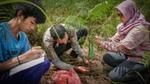
Leading and delivering on sustainability through our Compass commitments
We’ve set ambitious goals. Climate action to hit net zero, reducing plastic, regenerating agriculture, raising living standards in our value chain. Through our Compass commitments we’re taking action to improve people’s health, protect the planet and build a fairer, inclusive world.

“What on Earth does your Climate & Nature Fund do?”
Research shows over 60% of people believe companies’ greatest responsibility is action on climate. For Earth Day, activist and biologist Swetha Stotra Bhashyam asks Eric Soubeiran, MD of our €1bn Climate & Nature Fund, what and how it will deliver.