
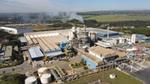
Our nutrition factory in Tianjin, northern China, and our laundry detergent facility in Indaiatuba, in the state of São Paulo, Brazil, have joined the World Economic Forum’s network of ‘Advanced Fourth Industrial Revolution (4IR) Lighthouses’.
This is an acknowledgment of how we’re using cutting-edge technologies to boost productivity and efficiency, respond rapidly to shifts in customer and consumer demand, equip our workforce with digital skills and limit our impact on the environment.
Since 2018, the World Economic Forum has been recognising companies that incorporate 4IR technologies – such as artificial intelligence – into their manufacturing and supply chain operations, effectively creating a network of the world’s most advanced factories.
These sites adopt and deploy advanced technologies to maximise efficiency and competitiveness, and drive sustainable and responsible business growth. They stand as a benchmark and a replicable model for manufacturers of all sizes, across different geographies and industries.
Tianjin (where we make Knorr and Hellmann’s products) is our first Lighthouse factory dedicated to the savoury foods industry and our third in China, alongside our Hefei personal care site and our TaiCang ice cream facility. Indaiatuba (where we make Omo, Surf and Brilhante products) is the first of our factories in Latin America to earn this recognition. With our personal care site in Dubai and our Dapada home care factory in India, we now have a Lighthouse across each one of our business groups.
As Reginaldo Ecclissato, our Chief Business Operations Officer, says: “To be named a Lighthouse factory is one of the world’s most influential awards in the field of advanced manufacturing. It’s not only a professional endorsement but also means that we have advantages over our competitors in terms of better products and service. It will continue to help our business grow with digital-driven rapid response and deliver long-term value.”
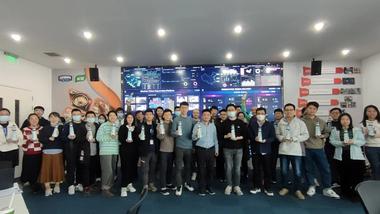
Tianjin: smart, agile and green
Despite the huge disruption that Covid-19 has caused to China’s food service industry over the past three years, our adoption of 4IR technologies at Tianjin has helped our business drive market expansion and increase the penetration of our brands and products in towns and small cities.
For instance, we’re using data analysis and machine learning to identify how we can better serve existing and potential restaurant customers. One way we’re doing this is by offering tailor-made recipes based on their style of cuisine, diner reviews and average cost of a meal. This ‘smart selling’ approach has doubled the number of customers since 2018.
Implementing agile manufacturing processes, we’re able to quickly increase or decrease production in response to changes in customer orders and consumer demand, all while minimising waste and business loss. And through dynamic supply modelling, we integrate our planning systems and synchronise information with suppliers to increase the efficiency of our inventory control and logistics.
Combined, these have cut order-to-delivery lead time by over 40%, which means we’re better able to offer consumers the products they want, when they want them.
We’ve implemented ‘lights-out production’ – 24/7 manufacturing with minimal operator intervention. This requires a level of automation and precision that only AI can deliver. The fact that we no longer need operators to carry out routine work has resulted in an almost doubling of labour productivity, freeing up the team’s time to spend on more value-adding activities.
The site generates renewable electricity on site from solar and wind. Energy use on site is controlled by a smart management system which enables us to identify opportunities to make real-time tweaks and ongoing improvements. This has contributed to a reduction of our electricity consumption by 32% and carbon emissions by 17%.[a]
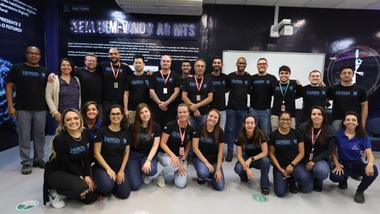
Indaiatuba: speed, quality and optimisation
In Brazil, Indaiatuba – the largest laundry detergent powder factory in the world – has implemented technologies such as digital twinning and AI to improve cost efficiency and agility while dramatically cutting its environmental footprint.
The process used in the manufacture of laundry powders is highly complex, so making changes is time-consuming. The team set up a digital twin which uses machine learning to predict the optimal process parameters for new formulations. This eliminates the need for physical trials, significantly speeding up the launch of new innovations such as our first anti-residue detergent.
The old process was also a big source of GHG emissions and accounted for 80% of the plant’s entire energy consumption. We switched to biomass for power and used a machine-learning system to improve the thermal efficiency of the operation. This cut the plant’s scope 1 emissions by 96% and energy consumption and cost by over 50%.
The team is also using machine learning to achieve right-first-time sealing of packs to increase product quality and reduce waste, and to predict the optimal time to carry out equipment maintenance to reduce maintenance costs – which has almost halved since 2018 – and maximise machine availability.
The ability to ship products direct from the factory is a real competitive advantage for the powders business in Brazil, given the complex customer distribution network. In the past, customer order allocation was prone to human error because of 600 daily decisions, 13 critical variables and constant changes. Using a machine-learning algorithm, the team can now predict the ideal allocation and route, using real-time data. This has reduced distribution costs while improving inventory and service levels.
At the heart of this transformation is a digital training programme which has upskilled the entire Indaiatuba workforce as well as more than 70 employees from seven other Unilever factories across the region. The team also established a tech ecosystem which engages more than 35 partners – including start-ups, universities and suppliers – for the fast prototyping of new solutions.
As Francisco Betti, Head of Advanced Manufacturing and Value Chain at WEF, says: “Lighthouses are demonstrating how to scale advanced technologies across entire manufacturing networks and beyond towards suppliers and customers or new functions such as procurement, logistics and research and development.”
This article was amended on 21st September 2023. An earlier version said the site uses 100% green electricity generated on site from wind, water and biomass, in addition to solar and geothermal energy. The site generates part of its total electricity consumption on site from solar and wind, with the remainder being imported from the grid and supported by renewable Energy Attribute Certificates.
Related articles
Shining a light on our first Lighthouse factory in India
As the first FMCG factory in India to join the World Economic Forum’s (WEF) Global Lighthouse Network, the Unilever Dapada factory, lying north of Mumbai, is a beacon of tech-driven efficiency, innovation and empowerment. There are many reasons why. Here are the top five.
Our TaiCang site named world’s most advanced ice cream factory
WEF recognises our China manufacturing facility as a ‘Fourth Industrial Revolution Lighthouse’
Hefei joins 'Lighthouse' network of world's most digitally advanced factories
Our Hefei site in China has become our second facility in nine months – alongside the Dubai Personal Care factory – to join the World Economic Forum’s network of Lighthouse factories, shaping the future of manufacturing through digital technologies.