

Tapping into white spaces is Unilever International’s (UI) speciality.
In fact, making the most of underleveraged opportunities has made UI one of Unilever’s fastest-growing businesses.
“We work with brands on two levels – by growing core brands in white spaces and by scaling small/niche brands in more markets,” explains Aseem Puri, CEO of Unilever International.
And although UI applies this approach across all of Unilever’s brands, the lion’s share of this white space opportunity is benefiting the Personal Care (PC) business group.
Why is the Personal Care/Unilever International combination so successful? The answer lies in the nature of Personal Care products.
Because the range supports the basic hygiene and health needs of consumers from the top to the bottom of the income pyramid, it is imperative to grow penetration in more consumer segments, hard-to-reach markets and unconventional channels.
How UI has the edge
Personal Care now accounts for over a third of UI’s business, with brands like Pears, Brut, St Ives and Simple growing between three to five times their original size with UI support.
And with the current rapidly changing market conditions well-aligned with UI’s agile business model, this growth is set to continue.
“Every aspect of today’s FMCG environment is fragmenting, from channels to consumer base to consumption moments,” says Aseem.
To thrive in today’s fragmented world, you need multiple models to co-exist in market at the same time.
Aseem Puri, CEO of Unilever International.
Here are three examples of how UI and Unilever Personal Care have the edge in three underserved markets.
The market edge
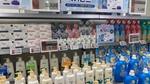
There are currently over 80 markets that Unilever does not reach directly. These Small, Island, Landlocked or Extreme markets, also known as SMILE, are a key area where the UI/PC partnership has thrived.
Today, the opportunity in this segment is worth half a billion dollars.
Although difficult to access due to a lack of supply-chain infrastructure, countries like Yemen, Mongolia, East Timor, Fiji, Papua New Guinea, Guam, Malta and Maldives nevertheless offer a huge untapped demand for health and hygiene products. The UI team has answered this need by establishing its own distribution and marketing systems that have allowed them to reach these markets.
“A great proof point is Korea,” explains Aseem. “The business was in sharp decline a few years ago, but we have turned it around into a fast-growing business via consumer-insight-driven investment in brand building and a strong route-to-market strategy, including Korea’s thriving e-commerce channels. Dove body wash and soap bars are now market leaders, which is impressive, given the intense local competition in the beauty and personal care market in Korea.”
This same success can be seen replicated in Nigeria and Ghana where key brands like Rexona, Dove and Axe are also growing market share.
“We are even reaching out to the most difficult geographies like Libya and some of the countries in Levant with our core brands. We are bringing brand purpose with World Oral Care Day and dentist partnerships in Mongolia and Yemen, helping market development and improving hygiene in these small countries,” says Aseem.
The consumer edge
With the expatriate population standing at 281 million and growing, the diaspora can be seen as one of the largest underserved consumer groups in the world.
But UI is fixing that.
As experts in product compliance and cross-border shipping, UI partners with exporters and distributors to get brands usually only available in home markets to loyal consumers wherever they are living.
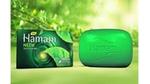
Hamam, for example, is a much-loved and trusted soap brand in India that is not available in many other markets. UI has made it its mission to make it accessible to the Indian diaspora living around the world.
The travel edge
The travel sector is UI’s newest PC venture. Launched in 2019, it has seen high double-digit growth thanks to three principal vectors:
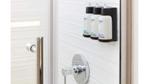
Hotels where Dove amenities such soap, bodywash, hand wash, and shampoo and conditioner are provided for consumers in large, environmentally friendly, refillable bottles.
Airlines where Signal and Pepsodent toothpastes and toothbrushes are provided as part of in-flight care pouches.
Government institutions where products such as Lifebuoy sanitisers have continued to be popular even post-pandemic.
Beyond generating significant sales for the business, placing Unilever brands within the travel environment provides millions of touchpoint opportunities where consumers can try products they may not be familiar with.
“Such partnerships also help Unilever’s business model, centred on making sustainable living commonplace,” explains Aseem. “In hotels, for example, we are working to reduce plastic waste by replacing miniature single-use plastic amenities with refillable large packs.”
What’s next?
So what is next on the agenda for this powerful partnership?
“We are confident that we can take the legacy that we have built over the last decade into the future,” says Aseem.
“Through an even more focused strategy, agility, innovation, a highly committed team, strengthened governance and most importantly a strong partnership with Unilever’s brands, we are determined to continue to deliver substantial growth in the coming decade.”
Fabian Garcia, President, Unilever Personal Care could not agree more: “Our Personal Care brands serve over a billion people every day with high quality and affordable brands that provide health, hygiene and dignity.”
Tapping into these white spaces and serving the underserved is what UI do best and together we will continue our strong partnership to ensure we can deliver our much-loved brands to consumers all around the world.
Fabian Garcia, President, Unilever Personal Care
Related articles

Unilever International enters deal to make hotel stays more sustainable
Unilever International has forged a partnership with the InterContinental Hotels Group to supply the guest bathrooms in its Hotels & Resorts with larger packs of personal care products in a move that will significantly cut IHG’s single-use plastic footprint.

How Unilever International is serving up a taste of home
Unilever International’s first Diaspora stand at Gulfood, the world’s biggest food exhibition, clearly hit a sweet spot this year, unlocking new channels to market for Unilever’s beloved local food brands. We take a look at how Unilever International is feeding a market hungry for the foods they grew up with.

Unilever International celebrates decade of consistent growth serving the underserved
Set up in 2012 as an export-driven business to cater for underserved markets, Unilever International has consistently been one of our fastest-growing businesses globally. We share the inside story of its unique operating model and entrepreneurial culture.