
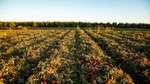
In 2021, Unilever presented its Regenerative Agriculture Principles, aimed at working with farmers, suppliers and partners to apply agricultural practices that can regenerate and protect soil, help ensure food security and supply chain resilience, and contribute to Unilever’s Net Zero pathway.
Four projects were designed to implement these principles, addressing the challenges and unique needs of different crops and landscapes, while also providing a framework to measure the impact of implementation.
Although change in agriculture is usually measured over several years, the results gathered from these projects show that they are already taking root and delivering in terms of reducing greenhouse gas emissions, increasing biodiversity, improving water efficiency and quality, and strengthening soil health.
“Seeing the positive impact these projects are making is incredibly encouraging. It highlights how collaboration has the power to effect real change. We are learning from the experiences of our farmers and partners and continue to scale our projects and grow more of our ingredients following regenerative agriculture principles,” says Hanneke Faber, Nutrition President at Unilever, adding that regenerative agriculture is now a key investment area for Unilever’s €1 billion Climate & Nature Fund.
“There is a real urgency to reduce food’s impact on the planet while making crops more resilient to climate change. Implementing regenerative agriculture principles is the best way to do this,” she says.
It is still early days, but as these four case studies show, there is ground for optimism.
Water and soil management – Tomatoes, Badajoz, Spain
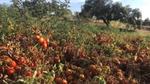
The aim: Knorr, in partnership with Spanish tomato supplier Agraz, is working to help farmers in the Badajoz region protect their crops from the effects of decreased rainfall and depleted underground water reserves, as well as protect the area’s biodiversity.
Why it matters: “Through these projects, we are seeing a reduction of costs, a reduction of water used, a reduction in the use of fertilisers and pesticides, which is a great benefit for the soil. The change we are making in agriculture makes us feel very proud. First, for having been one of the pioneers, and second for the part we are playing in caring for the planet.” Antonio Tienza Villalobos, farm manager at Aldea del Conde S.L. (in the Badajoz region).
The project: By using cutting-edge sensors and soil probes that inform farmers about the exact amount of water needed, the new irrigation systems allow more precise water use, resulting in significant financial savings and a more resilient production system.
In a second parallel trial, three farmers were encouraged to plant wildflower borders in order to increase biodiversity.
The results:
- The project saw a 37% decrease in greenhouse gas (GHG) emissions (kg of CO2 equivalent) per kg tomatoes compared to GHG emissions before the project.
- Soil organic matter increased from 1% in 2020 to 1.27% in 2022. This is a key indicator of soil fertility and the soil’s ability to capture carbon. The more organic matter soil contains, the more fertile it is and the more carbon it can absorb.
- There was a 173% increase in pollinators and 27% increase in wildflower diversity where farmers had put in wildflower borders.
Through these projects, we are seeing a reduction of costs, a reduction of water used, a reduction in the use of fertilisers and pesticides, which is a great benefit for the soil.
Antonio Tienza Villalobos, farm manager at Aldea del Conde S.L.Methane reduction – Rice, Arkansas, US
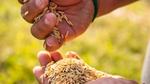
The aim: Knorr teamed up with US rice supplier Riviana and the University of Arkansas (UARK) to find ways for farmers to grow rice while preserving water reserves and decreasing methane emissions.
Why it matters: “We are committed to finding new ways of growing traditional crops that work for farmers, our business and the environment. This project is a great example of this commitment in action. With nearly 60% of Unilever’s carbon footprint coming from the raw materials and ingredients we buy, it is essential that with our procurement teams, we work with our suppliers to reduce the climate impact of our products.” Eric Soubeiran, Unilever’s Vice President, Climate & Nature.
The project: The aim of this programme was to find ways to reduce the large amount of methane released when rice fields are flooded. The programme introduced a suite of new practices, including furrow irrigation and a method called wetting and drying which, by reducing the amount of time the land stays under water, decreased the amount of methane released.
The results:
- 76% less methane (kg of CO2eq per kg rice) was released in comparison to releases before the project.
- 48% less greenhouse gases emissions (kg CO2eq per kg rice) were released in comparison to GHG emissions before the project.
With nearly 60% of Unilever’s carbon footprint coming from the raw materials and ingredients we buy, it is essential that with our procurement teams, we work with our suppliers to reduce the climate impact of our products.
Eric Soubeiran, Unilever’s Vice President, Climate & Nature.Soil protection – Soy beans, Iowa, US
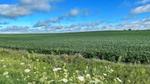
The aim: Since 2018, Hellmann’s has been working with Practical Farmers of Iowa, PepsiCo and soybean supplier ADM to better protect the soil used to grow soybeans for Hellmann’s mayonnaise in the US. The project also aims to reduce greenhouse gas emissions and nitrate levels in water.
Why it matters: “The programme is developed around three pillars that can be replicated for different issues with different crops and locations. The three pillars – financial assistance, technical assistance and peer support/learning – are essentially the blueprint for how programmes are being set up in North America.” Stefani Millie, Senior Manager, External Affairs and Sustainability, Unilever.
The project: 523 farmers and over 35,000 hectares of farmland were involved in the cover crop planting project. Farmers were provided with financial and technical support to plant non-commercial cover crops to protect the soil from the depleting effect of adverse weather, such as wind and rain in between planting.
The results:
- 14% less nitrate run off water compared to comparison fields.
- 6% less greenhouse gases compared to comparison fields.
The programme is developed around three pillars that can be replicated for different issues with different crops and locations.
Stefani Millie, Senior Manager, External Affairs and Sustainability, Unilever.Reducing water pollution – Lombardy, Italy
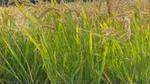
The aim: Launched by Knorr in partnership with Italian supplier Parboriz, this project aimed to find viable ways to reduce water pollution and greenhouse gas emissions, while also increasing biodiversity.
Why it matters: “Collaboration like this is incredibly valuable as it allows us to test out what practices will have the most impact for our farmers and suppliers in the field.” Hanneke Faber, Nutrition President, Unilever.
The project: Unlike other projects, this initiative was based on four demonstration farms spanning 900 hectares, with the aim of testing out new practices and understanding how they could be applied to commercial farms. None of the rice grown was processed or used by Unilever. However, the learnings and results from the demonstration farms were so impressive that the practices will be rolled out to over 200 other rice farmers in the area in 2023.
The results:
Practices on the demonstration farms successfully decreased the amount of chemical residue found in water. This included:
- 78% reduction in pesticide residue
- 62% reduction in herbicide residue
- 78% reduction in fungicide residue
Collaboration like this is incredibly valuable as it allows us to test out what practices will have the most impact for our farmers and suppliers in the field.
Hanneke Faber, Nutrition President, Unilever.
What happens next
These projects lay the ground for an extensive scaling-up of regenerative agriculture in Unilever’s supply chain that will see regenerative agriculture practices increasingly providing the ingredients used by our nutrition brands.
Today, nine projects are live in the field, covering 48,000 hectares of soy, rice, tomatoes, onion, garlic and dairy in North America, Europe and South Asia.
By the end of this year, we aim to have about 300,000 hectares contracted. By 2030, we will have expanded to more than 100 programmes, contributing to Unilever’s commitment to restoring and regenerating 1.5 million hectares of land, oceans and forests.
As Hanneke Faber says, “The time for pilots is over. It is time to go big.”