

How it started
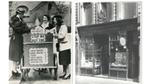
In 1913 an entrepreneurial butcher called Thomas Wall decided to counteract the summer dip in sales of sausages by branching out into selling ice cream. World War 1 put his idea on hold. But when Unilever purchased the business in 1922 and large commercial freezers began arriving from the US, the Wall’s ice cream brand was brought to life.
Demand for Wall’s saw vendors travelling the streets of London to sell ice cream via horse and cart. It wasn’t long before bike deliveries were added to the mix. By 1939, Wall’s fleet of tricycle salespeople was 8,500 strong.
Fast forward 20 years and construction began for Wall’s first state- of-the-art factory. In 1962, at full capacity, it produced 90,000 gallons of ice cream each day. And it’s still in operation today, making 4 million Cornetto ice creams every week and more than 1 billion ice creams every year.
The brand has come a long way from selling vanilla ices on the streets of London. Today, Wall’s sells more than 40 brands, many of them local to specific markets. For more information, read the ‘It might surprise you to learn’ section below. What’s more, its ice creams are sold in 52 countries around the world.
How it’s going

There are five Unilever brands in the top ten bestselling ice creams in the world. Two of them – Cornetto and Carte D’Or – are part of Wall’s Heartbrand portfolio.
In 2021, sales from Unilever’s Ice Cream portfolio reached €6.9 billion in turnover, with underlying sales growth of 5.7%. Wall’s was one of three €1 billion ice cream brands.
In Q3 2022, the year Wall’s celebrated its 100th birthday, underlying sales growth for Unilever’s Ice Cream business group was 13.2%, with 12.0% from price and 1.0% from volume.
Today, out-of-home purchases still play a significant part in ice cream sales, but the Covid pandemic has opened new quick commerce channels to supply ice cream to consumers.
Unilever’s Ice Cream Now division caters for in-home eating by rapidly delivering our products to consumers in 35 countries.
Getting ice cream to consumers fast and without spoiling has been achieved through partnerships with delivery services such as Grubhub and Uber Eats, alongside tapping into Wall’s existing network of freezer cabinets in local stores and restaurants. This network works to ensure brands such as Carte D’Or go from an online order to delivery to the consumer’s doorstep in less than 30 minutes.
In 2021, this combination of speed and response to consumer demand saw this part of our ice cream business grow by 60%.
The purpose that powers it

There is something for everyone in the Wall’s ice cream portfolio, and that breadth of choice has the ability to drive happiness among all age groups, as well as melt down barriers between different communities.
Wall’s is working hard to leverage that. To build a happier and more inclusive world, one lick at a time.
Alongside partners such as Symrise and Giz and the International Fund for Agricultural Development, Wall’s is working with smallholder farmers to improve yields and livelihoods. Their work has reached 40,000 people in 9,000 households, across 76 villages in the Sava region of Madagascar that help supply its vanilla requirements.
What’s more, every brand it sells in its kids’ range of ice creams adheres to Wall’s Responsibly Made for Kids promise.
The promise is based on three pillars, designed to help parents and care-givers make informed choices for their children. These are Responsible Communication through advertising; Responsible Selling with our Responsibly Made for Kids mark; and Responsible Development, which includes an undertaking that every ice cream in our kids’ range has no more than 110 calories and a maximum of 12 grams of sugar per portion and 3 grams of saturated fat.
Brand new ideas
Twister Peek-a-Blue
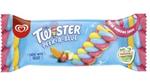
The original Twister ice cream was launched by Wall’s in 1982. Fast forward 40 years and the brand extended its range with the launch of Twister Peek-a-Blue. The new lolly references the original Twister shape, but is reimagined to look like twisted, braided strips of ice cream. Created using fruit purée and fruit juice concentrates, it delivers a delicious melon and strawberry flavour combination and meets all of the criteria of the Responsibly Made for Kids promise at 66 calories per portion.
Cornetto Love Rose

Cornetto Love Rose marries the brand’s signature crunchy cone with a crown in the shape of a rose. Delicious and instagrammable, the novel shape is created using a patented nozzle that replicates the petals of a rose. It’s available in strawberry cheesecake and peach flavours, and wherever possible has a paper lid to protect the rose instead of a plastic one. Cornetto Rose is currently available in Thailand, Indonesia, Turkey, the EU and China.
Wall’s Mini Bites

Indulgence, portion control or sampling just a little bite of new flavours. Whatever the motivation, snacking is here to stay. According to a recent report,88% of consumers say a balanced diet can include a little indulgence and Wall’s is here for it. In 2021 the brand launched Wall’s Ice Cream Mini Bites in two flavours, vanilla and strawberry, in Australia, the UK, Thailand and Indonesia. Each box contains ten mini treats to share with all the family.
Carte D’Or Premium Desserts for professional kitchens

The Carte D’Or brand began over 40 years ago as a restaurant desserts brand in Paris, proudly served by chefs in the home of gastronomy. That heritage of culinary expertise remains at its heart today. To this end, this year, alongside its consumer offering, the brand launched a line of premium desserts for professional kitchens. These allow time-pressed chefs to create Carte D’Or Panna Cotta, Carte D’Or Crème Brûlée, Carte D’Or Lemon Mousse or Carte D’Or Chocolate Mousse consistently and speedily in three to four easy steps.
It might surprise you to learn…

In Italy, Wall’s is called Algida. In Germany, Langnese. In the Netherlands, Ola. In the US, Good Humor and in Brazil, Kibon. Wall’s might have different names in different markets but it’s the same delicious ice cream. Local names have been kept because each contains the history and reputation of the former brands. And all of them are united by their shared Heartbrand logo and its phiosophy to ‘Live from the Heart!’ Wherever customers see the Heartbrand logo around the world it means ‘Here there’s joy’.
Iconic ads
Related articles

Championing global commitments that ensure no food marketing to under-16s
We’re raising the age for restricting marketing of foods and beverages to kids aged 13–16. It’s one of our enhanced principles recognising the influence of adverts on digital and social channels and supporting parents in the selection of permissible treats for their family.

Reaching ice cream lovers anytime, anywhere
Fulfilling a craving for ice cream used to require being in-store or near an ice cream van. Unilever’s Ice Cream Now (ICNOW) teams are working to change that. Whether you’re online, in transit, in a virtual world or exploring earth’s atmosphere, they’ll find a way to deliver.

Warmer ice cream for a cooler planet?
Find out how we’re working to lower the climate impact of the ice cream industry.